
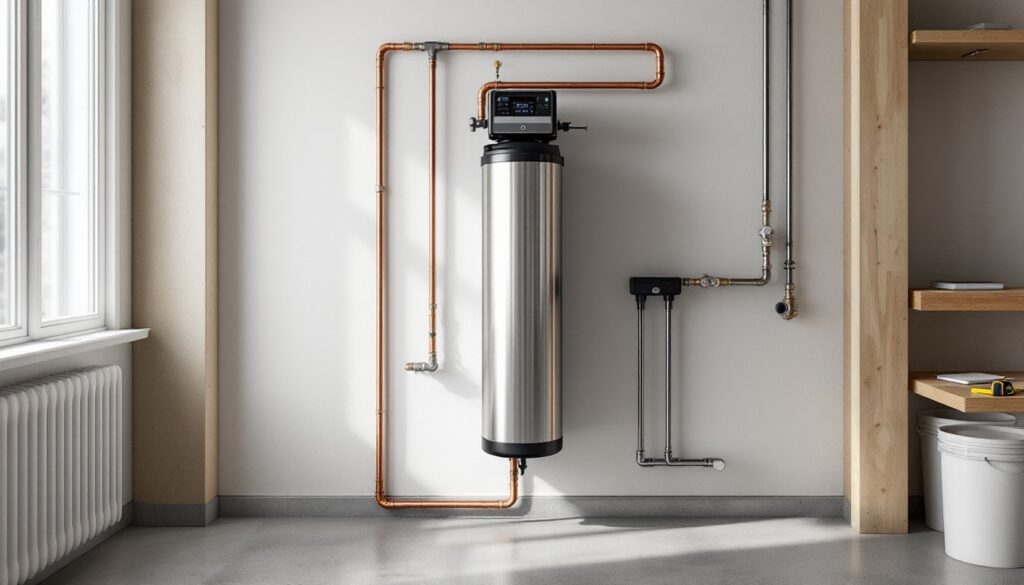
If you’ve noticed soap scum buildup, dry skin, or stiff laundry, hard water might be the culprit. A whole house water softener addresses these issues by removing minerals like calcium and magnesium before they reach your taps. But here’s the practical question: how much does one actually cost? The answer ranges from $1,000 to $4,500 for the unit itself, plus another $150 to $3,000 in installation labor depending on your home’s plumbing setup. This guide breaks down where those costs come from, what influences pricing, and how to budget smartly for this improvement.
Table of Contents
ToggleKey Takeaways
- A whole house water softener typically costs $1,000 to $4,500 for the unit, plus $150 to $3,000 in installation, bringing most projects to a $1,500 to $6,000 total investment.
- Grain capacity is the primary pricing factor—a 32,000-grain entry-level unit runs $1,000 to $1,500, while 64,000-grain mid-range systems cost $2,000 to $2,800, and premium 80,000+ grain models exceed $4,500.
- Installation costs can spike dramatically if your home needs new plumbing lines, drain work, or electrical modifications, potentially adding $1,000 to $2,500 beyond basic labor charges.
- Plan for $500 to $1,200 in annual operating costs, primarily from salt consumption ($50 to $100 monthly), making the system reach full payback in 8 to 12 years through reduced soap use and longer appliance life.
- Save money by getting multiple quotes, purchasing equipment separately from installation labor, timing your purchase for off-season promotions, and choosing salt-based systems over salt-free options if budget is your priority.
Average Price Range for Whole House Water Softeners
A whole house water softener typically costs between $1,000 and $4,500 for the equipment alone. Entry-level units (32,000 to 48,000 grain capacity) run $1,000 to $2,000, while mid-range systems (64,000 grains) land in the $2,000 to $3,000 range. Premium models with extra features or larger capacity (80,000+ grains) can exceed $4,500. Installation adds $150 to $3,000 depending on whether you have an existing salt line, available drain access, and whether electrical work is needed. Many homeowners find the total project lands between $1,500 and $6,000.
The grain capacity number matters: it tells you how many grains of hardness a system can remove before needing a regeneration cycle. A family of four in a moderately hard water area typically needs a 48,000 to 64,000 grain unit. Underbuying means frequent regeneration and higher salt costs: oversizing wastes water and salt during the regeneration process itself.
Factors That Impact Water Softener Pricing
Several variables shift the final bill beyond the base unit cost. Your home’s water hardness (measured in grains per gallon or GPG), household size, daily water usage, and plumbing layout all play a role.
System Capacity and Type
Grain capacity is the biggest pricing lever. A 32,000-grain system costs roughly $1,000 to $1,500, while a 64,000-grain unit runs $2,000 to $2,800. Going larger bumps you into the $3,500+ range. Salt-based systems are the most affordable option, running $1,000 to $3,000. Salt-free systems (which use potassium chloride or template-assisted crystallization) cost $2,000 to $4,500 because they’re more complex and don’t require ongoing salt purchases, a trade-off many consider worthwhile. Dual-tank systems, which maintain soft water during regeneration, typically cost $3,500 to $5,000 but eliminate the inconvenience of zero soft water during the cycle.
Brand and Quality Level
Brand reputation and warranty coverage affect pricing noticeably. Established names like Culligan, Kinetico, and Water-Right command premium pricing (often 20–30% higher) because of proven reliability and service networks. Budget brands save $300 to $500 upfront but may have shorter warranties (5 years vs. 10+) and fewer local service techs. A mid-tier brand often strikes the best balance: solid performance without the name markup. According to data on whole house water softener installation costs, higher-end systems justify their cost through durability and lower long-term repair rates.
Installation Costs and Hidden Expenses
Installation labor typically runs $300 to $1,500, but the total can jump if your home needs plumbing modifications. If an existing inlet line is already in place with a drain, you’re looking at the lower end, roughly $300 to $600 for a straightforward swap. If your plumber must run new copper or PEX lines, install a drain line to a floor drain or sump pit, or add electrical for a control head, costs climb to $1,000 to $2,500. Some homes require a water test ($50 to $200) to confirm hardness levels and size the system correctly. Permit costs vary by jurisdiction, many municipalities require no permit for a water softener, but check locally: if needed, expect $50 to $300. Plumbing permits vary widely.
Don’t overlook the drain line. If you lack a floor drain near the water softener, you may need to break concrete or reroute to a sump pump, easily $500 to $2,000 in extra labor. A bypass valve is usually included but costs $100 to $200 if omitted from the quote. Salt delivery and storage are ongoing: budget $50 to $100 per month depending on water hardness and household size. Salt can be purchased in bulk bags (typically $8 to $12 each) or delivered automatically. Using resources like HomeAdvisor cost guides can help compare local contractor estimates and typical regional pricing.
Long-Term Maintenance and Operating Costs
After installation, plan on $500 to $1,200 per year in operating costs. Salt is the primary expense: a household using a 64,000-grain system in moderately hard water typically goes through 50 to 70 pounds per month, costing $50 to $100 monthly for salt alone. Harder water or larger households can double that figure. Softener maintenance is light, annual filter replacements ($40 to $80), resin tank cleaning ($100 to $200 if done professionally), and the occasional O-ring replacement ($20 to $50). Most units need a professional service call every 3 to 5 years for deep cleaning or resin bed regeneration, costing $150 to $400.
The math: a $2,500 system with $800 annual salt and maintenance costs reaches full payback in roughly 8 to 12 years through reduced soap use, longer appliance life, and softer laundry. Many homeowners stay in their homes for 15+ years, making that ROI solid. If you rent or plan to move within 5 years, buying may not pencil out, renting is sometimes an option, running $25 to $50 per month with no upfront cost.
Money-Saving Tips for Water Softener Installation
Get multiple quotes. Contact three to five local plumbers or water treatment companies. Installation labor can vary by $300 to $700 depending on crew efficiency and overhead. A detailed written estimate prevents surprise costs.
Buy the unit separately from installation labor. Many homeowners purchase systems online or from big-box stores ($200 to $500 cheaper than contractor-marked-up units) and hire a plumber to install only. Verify the plumber will accept a third-party unit and that it still carries a warranty.
Time your purchase. Water softener companies often run promotions in late fall or winter when demand drops. Saving $300 to $500 off equipment is realistic if you’re flexible on timing.
DIY if you have plumbing skills. If you’re confident with copper or PEX lines and understand your home’s water setup, you can tackle the installation yourself, saving $500 to $1,500 in labor. But, if the job requires breaking concrete for a drain line, running new main lines, or electrical work, hire a pro. A botched install costs far more to fix.
Choose salt-based over salt-free if budget is tight. You’ll spend more on salt over time, but the upfront unit cost is significantly lower. Once your situation improves, you can always upgrade.
Skip premium brands for a first system. A mid-tier brand from a reputable manufacturer with a 7 to 10-year warranty works well for most homes. Reserve premium pricing for a second home or if you have water hardness above 25 GPG. Tools like ImproveNet’s renovation guides can help you compare contractor bids in your area and understand what a fair price looks like locally.