If you’ve noticed tiny red or yellowish speckles on your houseplant leaves, or silky webbing between stems, you’re likely dealing with red spider mites, one of the most common indoor plant pests. These microscopic arachnids thrive in dry indoor environments and can wreak havoc on your collection if left unchecked. The good news: red spider mites are manageable with early detection and consistent treatment. This guide walks you through identifying an infestation, treating affected plants, and preventing future problems so your houseplants stay healthy and thriving.
Table of Contents
ToggleKey Takeaways
- Red spider mites are tiny arachnids that thrive in warm, dry indoor environments and can double their population every 5-10 days, making early detection critical for houseplant health.
- Identify infestations by looking for fine yellow or tan stippling on leaf undersides, delicate webbing between stems, and stunted new growth on affected plants.
- Treat red spider mites using a combination of water spraying, neem oil, and insecticidal soap applied every 5-7 days for 2-3 weeks to break their reproductive cycle.
- Increase humidity around houseplants by grouping them together, misting regularly, or using pebble trays—red spider mites cannot survive in environments above 40% humidity.
- Isolate infested plants immediately and dispose of severely damaged specimens sealed in plastic bags to prevent mites from spreading to your entire collection.
- Prevent future infestations through consistent watering, monthly leaf cleaning, and quarantining new plants for 1-2 weeks before introducing them to your houseplant collection.
What Are Tiny Red Spider Mites and Why They Infest Indoor Plants
Red spider mites aren’t actually insects, they’re tiny arachnids (relatives of spiders and ticks) that measure just 0.5 mm across, making them nearly invisible to the naked eye. You’ll typically see them clustered together on leaf undersides, creating the characteristic fine webbing that gives them their name.
These pests thrive in warm, dry conditions, exactly what most heated homes offer during winter. Indoors, they can reproduce year-round, with populations exploding every 5-10 days under ideal conditions. A single female can lay hundreds of eggs in her lifetime, so a small problem becomes a major infestation quickly.
Red spider mites feed by piercing plant cells and sucking out the contents, which starves your plant and introduces stress. They prefer soft-leaved plants like ferns, spider plants, roses, and beans, but they’ll colonize almost any houseplant if food is scarce. Low humidity and neglected watering schedules make infestations more likely, plants under water stress are weakened and more susceptible to pest damage.
How to Identify Red Spider Mite Damage on Your House Plants
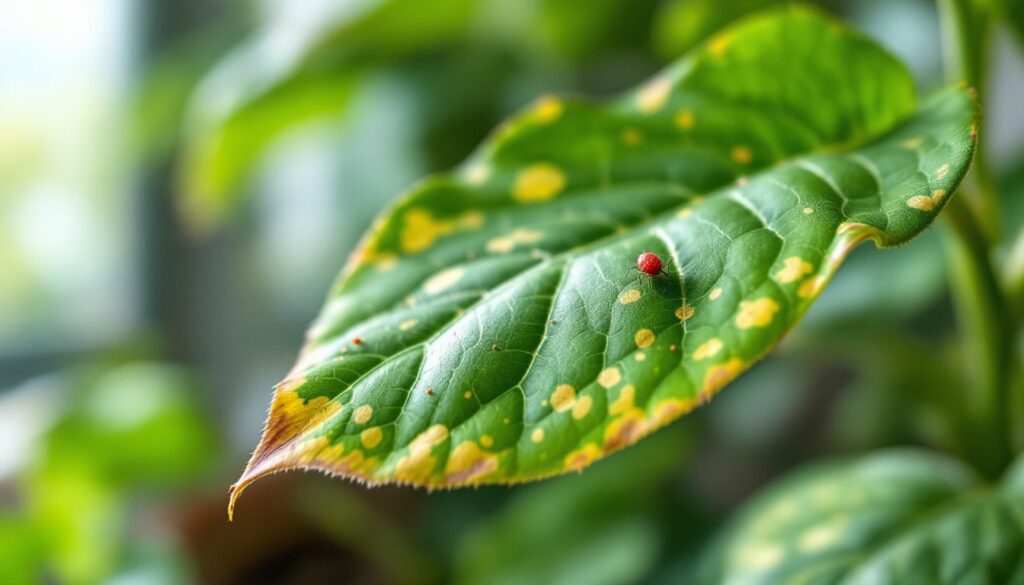
Catching an infestation early makes treatment far easier, so learn what to look for. The first sign is usually fine yellow or tan stippling on older leaves, tiny dots where mites have fed. As damage progresses, leaves turn bronze, brown, or silvery and may drop entirely.
Look for fine webbing, especially on leaf undersides and between stems. This webbing is thinner and more delicate than spider webs: mites use it as highways to move between leaves and as protection from predators. Under magnification (even a 10x loupe from a hardware store), you might spot tiny moving specks, these are the mites themselves.
Infested plants also show stunted new growth and overall decline in vigor. Leaves may curl or distort. If you spot webbing but no visible mites, they’re likely there in large numbers, webbing indicates a mature colony. Compare suspect leaves to photos on common indoor plant pests to confirm your diagnosis before treating.
Natural and Chemical Treatment Methods for Red Spider Mites
Once you’ve confirmed an infestation, treatment requires persistence. Mites reproduce so quickly that a single application rarely works, you’ll need to treat every 5-7 days for at least 2-3 weeks to break their lifecycle. Isolate the affected plant away from others to prevent spread.
Start by removing heavy webbing and mites with a strong spray of lukewarm water. Hold the plant over a sink or tub and spray both sides of every leaf thoroughly, hitting the undersides where mites cluster. Repeat this physical removal every 1-2 days for a week before moving to chemical or biological treatments, it actually works for light infestations and costs nothing.
For moderate to severe infestations, combine water spraying with follow-up treatments:
Neem Oil and Insecticidal Soap Solutions
Neem oil is a natural pesticide derived from neem tree seeds. It disrupts mite reproduction and suffocates eggs. Mix according to label directions (typically 1-2 tablespoons per gallon of water) and spray thoroughly, coating all leaf surfaces. Apply in early morning or late evening, never in direct sunlight, which can burn leaves. Wear gloves and a dust mask: neem oil has a strong smell and shouldn’t be inhaled.
Insecticidal soap (potassium fatty acids) is gentler than neem and safe for most houseplants, though test a small leaf first. It dehydrates mites on contact. Mix and apply per label instructions, again targeting leaf undersides. Repeat both treatments every 5-7 days.
For heavy infestations, The Spruce recommends sulfur dust or miticide sprays containing sulfur or abamectin. These are more aggressive but effective. Always read labels, wear appropriate PPE (safety glasses, gloves, and a respirator if applying dust or aerosol products), and apply in a well-ventilated area or outdoors if possible. Never mix different pesticides, they can create toxic reactions.
Preventing Red Spider Mites: Environmental Control and Plant Care
Prevention is easier than dealing with a full outbreak. Red spider mites despise humidity, they thrive in dry air below 40% relative humidity. Increase humidity around susceptible plants by grouping them together (plants create a microclimate), misting leaves regularly, or placing pots on pebble trays filled with water (set the pot on pebbles above the water, not touching it).
Water consistently. Drought-stressed plants attract mites and are more vulnerable to damage. Check soil moisture regularly: most houseplants prefer soil that’s moist but not waterlogged. Underwatering weakens plants and makes them easier targets for pests.
Keep leaves clean by wiping them with a soft, damp cloth monthly. Dust buildup blocks pores and stresses plants, making them pest-prone. Room temperature also matters, keep indoor temperatures around 65-75°F if possible. Mites reproduce faster in warm environments, so cooler rooms in winter naturally reduce population growth.
Quarantine new plants for 1-2 weeks before adding them to your collection. Inspect closely for webbing and stippling. Many garden pests hitch a ride on new purchases, and isolation prevents them from spreading. Check resources like Better Homes & Gardens for additional plant care tips tailored to specific species you grow.
When to Isolate Affected Plants and Dispose of Severely Infested Specimens
The moment you spot signs of infestation, move the plant away from others immediately. Place it in a separate room or corner, away from your main plant collection. Mites spread through air currents and by direct contact, so isolation stops them from jumping to healthy plants.
Treat the isolated plant aggressively for 2-3 weeks. If you see improvement, new growth without stippling, webbing disappearing, continue treatment through one full life cycle to ensure all eggs are dead. Once the plant is pest-free for 2-3 weeks, it’s safe to return to your collection.
Some plants aren’t worth saving. If a specimen is heavily infested (more than 50% of leaves affected), extremely stressed, or losing leaves rapidly, disposal is often the most practical choice. Destroying the plant stops mites in their tracks and frees up your time and resources for healthier specimens. Seal the plant in a plastic bag before discarding it, and wash your hands and any tools that touched it. Don’t compost infested plants, mites can survive and spread to your garden.
Conclusion
Red spider mites are frustrating, but they’re not a death sentence for your houseplants. Early detection, consistent treatment, and environmental control (especially humidity) are your best defense. Start with water sprays and neem oil, escalate to harsher treatments if needed, and always isolate affected plants. Prevention through proper watering, humidity, and regular leaf cleaning protects your collection long-term. With patience and persistence, you’ll beat the infestation and keep your houseplants thriving.