Most homeowners reach for the tap when it’s time to water their indoor plants, but there’s a better option sitting on the roof: rainwater. If you’ve ever wondered whether collecting and using rainwater for your houseplants is worth the effort, the answer is a qualified yes, with some important caveats. Rainwater is closer to what plants receive in nature, contains fewer chemicals than chlorinated tap water, and can give your indoor greenery a real boost. But like any DIY project, success depends on proper collection, storage, and understanding when rainwater might actually pose a risk. This guide walks you through the practical side of rainwater for indoor plants, so you can make an well-informed choice about whether it’s right for your setup.
Table of Contents
ToggleKey Takeaways
- Rainwater is good for indoor plants because it contains no chlorine or fluoride, is slightly acidic (pH 5.6) to match plant preferences, and provides dissolved oxygen that tap water lacks.
- Rainwater collection poses real risks: roof debris, metal runoff, and air pollution can contaminate water, so testing collected rainwater ($15–40) is wise if you have concerns about local air quality or roof condition.
- Proper rainwater collection requires a food-grade barrel with a first-flush diverter, mesh screen, and covered storage kept in a cool location—collected water should be used within 2–4 weeks to prevent algae and bacterial growth.
- Water indoor plants with collected rainwater at room temperature (65–70°F), apply at soil level, and reduce watering frequency by 10–15% since rainwater’s lower mineral content means plants absorb it more efficiently.
- A hybrid approach works best for most homeowners: use rainwater when available and supplement with filtered tap water during dry spells to maintain consistent plant care without pressure to maintain a perfect collection system year-round.
Benefits Of Using Rainwater For Indoor Plants
Rainwater has a clear advantage over tap water when it comes to plant health. It contains no chlorine, fluoride, or other chemical additives that some municipal water systems use. Many indoor plants are sensitive to chlorine in particular, which can accumulate in soil over time and inhibit nutrient uptake. Rainwater is also slightly acidic (around pH 5.6), which matches what most houseplants prefer and helps them absorb nutrients more effectively.
Another benefit is oxygen content. Rainwater naturally picks up dissolved oxygen as it falls, giving plants more of what they need at the root level. This is especially valuable for tropical houseplants and moisture-loving species. If you’ve struggled to keep common house plants thriving indoors, switching to rainwater can sometimes make a noticeable difference.
Rainwater also lacks the mineral buildup, called hard water deposits, that tap water leaves behind. Over months and years, mineral salts accumulate on soil surfaces and can crust over, making water repel rather than absorb. With rainwater, you sidestep this problem entirely. For indoor house plants that live with you long-term, this reduced mineral load means healthier root systems and less soil maintenance.
Potential Risks And Contaminants To Watch For
Rainwater isn’t automatically pure. Depending on where you live and what’s in the air, it can pick up pollutants before it reaches your collection system. Understanding these risks helps you decide whether the benefits outweigh the drawbacks in your specific location.
Pollution And Debris Concerns
Roof surfaces collect dust, bird droppings, leaves, and other debris. If you’re collecting rainwater directly off your roof, that first flush of water carries all of it. Metal roofs can leach zinc or copper into rainwater, while asphalt shingles may shed particles and break down over time. Gutters become gutter gardens overnight, full of dead leaves, pollen, and whatever else settles there.
Air pollution also matters. In industrial areas or near highways, rainwater can absorb nitrogen oxides and other pollutants from the atmosphere. According to research on sustainable houseplant practices, rainwater quality varies significantly by region and proximity to pollution sources.
When Rainwater May Not Be Safe
If your roof is treated with moss-killing chemicals or is covered in lichen, skip rainwater collection from that surface. If you live near a factory, major highway, or industrial site, the air pollution absorbed into rainwater may not be worth the effort, tap water becomes the safer choice. Acid rain, though less common in most of the US today, can still occur in some regions and makes rainwater unsuitable without testing.
The safest approach: if you’re concerned about your local air quality or roof condition, test your collected rainwater before using it on sensitive easy house plants or newly propagated cuttings. A basic water test kit runs $15–40 and tells you whether contaminants are present.
How To Collect And Store Rainwater Safely
Collection starts with a clean system. You’ll need a rain barrel or storage container (food-grade plastic, never treated wood or corroded metal), a gutter downspout diverter or simple collection mechanism, and ideally a screen or filter to catch leaves and debris.
Here’s the practical setup:
- Install a diverter on your downspout so the first flush of dirty water bypasses the barrel (let it run 5–10 minutes to rinse the roof).
- Position the barrel under the downspout with a removable mesh screen on top to block leaves and insects.
- Elevate the barrel slightly (12–18 inches) so you can fit a watering can underneath the spigot, gravity flow saves effort.
- Keep the barrel covered to prevent mosquito breeding and algae growth from sunlight.
- Store collected water in a cool, shaded location.
Water quality degrades over time. Stored rainwater can develop algae or bacterial growth, especially in warm conditions. For optimal results, use collected rainwater within 2–4 weeks. If storing longer, consider adding a screen filter or indoor house plants like peace lilies can tolerate water that’s been sitting slightly longer, though fresher is always better.
For an average 1,000 square-foot roof, one moderate rain delivers 600–800 gallons into gutters, far more than most indoor plant collections need. A single 50-gallon barrel fills quickly and covers routine watering for several weeks.
Best Practices For Watering Indoor Plants With Rainwater
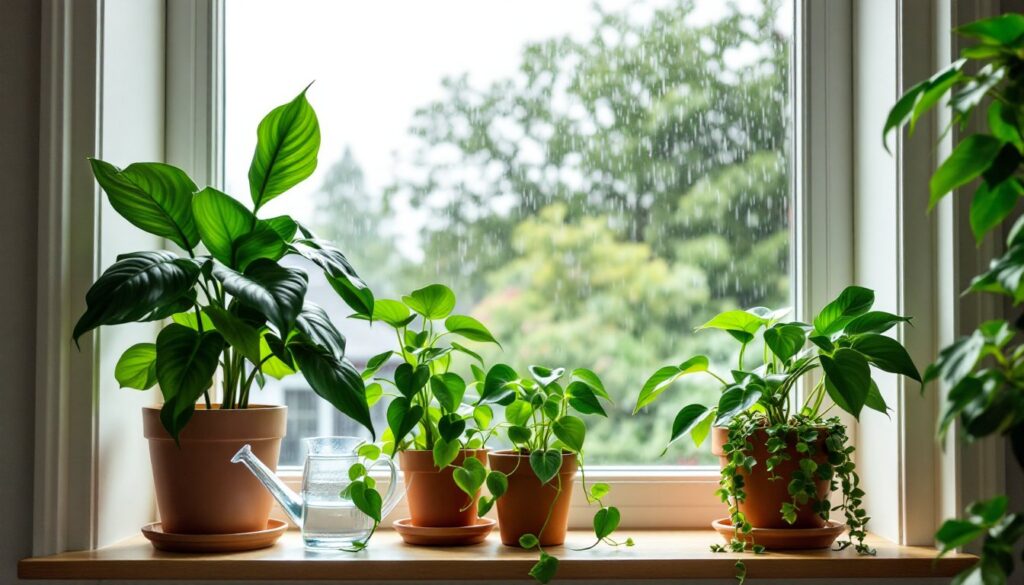
Using rainwater correctly makes all the difference. Let collected water sit at room temperature before watering, cold rainwater can shock tropical species. Most houseplants prefer water that’s roughly 65–70°F, so leaving your barrel indoors or in a shaded spot helps.
Water less frequently, but more deeply. Rainwater’s lower mineral content means plants absorb it more efficiently, so you may need to reduce watering frequency by 10–15% compared to tap water. Overwatering is still the top killer of indoor plants, so monitor soil moisture before reaching for the watering can. Stick your finger 1–2 inches into soil: if it feels moist, wait another day or two.
For cat safe house plants and other sensitive varieties, rainwater is especially beneficial because it won’t accumulate chemical residues that can irritate foliage or roots. Apply water at the soil level, not on leaves, to minimize fungal issues and maximize nutrient absorption at the roots where it counts.
If you collect rainwater seasonally (heaviest in spring and fall in many regions), plan a hybrid approach: use rainwater when it’s available and supplement with filtered tap water during dry spells. Even partial use of rainwater, say, 50% of your watering, delivers noticeable benefits without the pressure to maintain a perfect collection system year-round.
Resources like The Spruce and Better Homes & Gardens offer detailed guides on plant-specific watering needs, so you can tailor your approach to your actual collection capacity and plant types.
Conclusion
Rainwater is a practical, cost-free resource that can genuinely improve your indoor plants’ health, if you set it up properly and stay aware of potential contaminants in your area. Start small with a single barrel, monitor your plants’ response over a few weeks, and scale up if you see real results. For most homeowners with standard indoor plant collections, rainwater collection is a manageable DIY project that pays off in healthier foliage and greener growth. Keep it simple, keep it clean, and your plants will thank you.