Carnivorous plants have an undeniable mystique, they’re living, breathing insect traps that thrive without traditional fertilizer. While they look exotic and demanding, many species adapt surprisingly well to indoor spaces when you understand their specific needs. Unlike fussy orchids or temperamental ferns, carnivorous plants follow predictable rules. Master those fundamentals, and you’ll have a conversation-starter on your windowsill that actually catches its own food. This guide breaks down which species work indoors, what conditions they need, and how to keep them healthy year-round.
Table of Contents
ToggleKey Takeaways
- Indoor carnivorous plants are practical pest controllers that thrive when you master three core principles: bright light, distilled water, and proper dormancy or humidity.
- Venus flytraps and Sarracenia pitcher plants require 3–4 months of cool winter dormancy (35–50°F) to survive long-term, making a basement shelf or unheated garage essential for these species.
- Sundews and butterworts are more forgiving beginner-friendly carnivorous plants that tolerate tap water better and need less rigorous dormancy compared to other varieties.
- Use only distilled, rainwater, or reverse-osmosis water exclusively, as tap water minerals accumulate and poison the roots of carnivorous plants over time.
- Carnivorous plants need at least 3–4 hours of direct sun daily or full-spectrum grow lights positioned 6–12 inches above the plant to support healthy growth and trap production.
- Avoid commercial fertilizer entirely; carnivorous plants extract nitrogen from trapped insects and will be permanently harmed by traditional plant nutrients.
Why Grow Carnivorous Plants At Home
Carnivorous plants aren’t just novelties, they solve a real problem. If you’ve got a gnat infestation or perpetual mosquito trouble in one room, a few pitcher plants or sundews will quietly work as nature’s pest control, no chemicals needed. Beyond that practical angle, carnivorous plants are different. They spark curiosity and conversations in a way that a pothos or snake plant never will.
They’re also surprisingly rewarding to maintain once you grasp their logic. Unlike high-maintenance bonsai or fussy succulents, carnivorous plants don’t want your ornamental fussing, they want specific water quality, humidity, and light. When you nail those three factors, these plants practically thrive on neglect. That’s the opposite of most houseplants, and many DIY growers find it refreshing. Plus, watching a Venus flytrap snap shut on an insect or seeing prey trapped in a pitcher plant’s translucent tube delivers a visceral satisfaction no regular houseplant can match.
Finally, growing carnivorous plants is educational. You’ll learn about nutrient cycles, plant adaptation, and how evolution creates wildly specialized life forms. It’s botany that you can touch, feed, and watch work in real time.
The Best Indoor Carnivorous Plants For Your Space
Venus Flytraps And Sundews
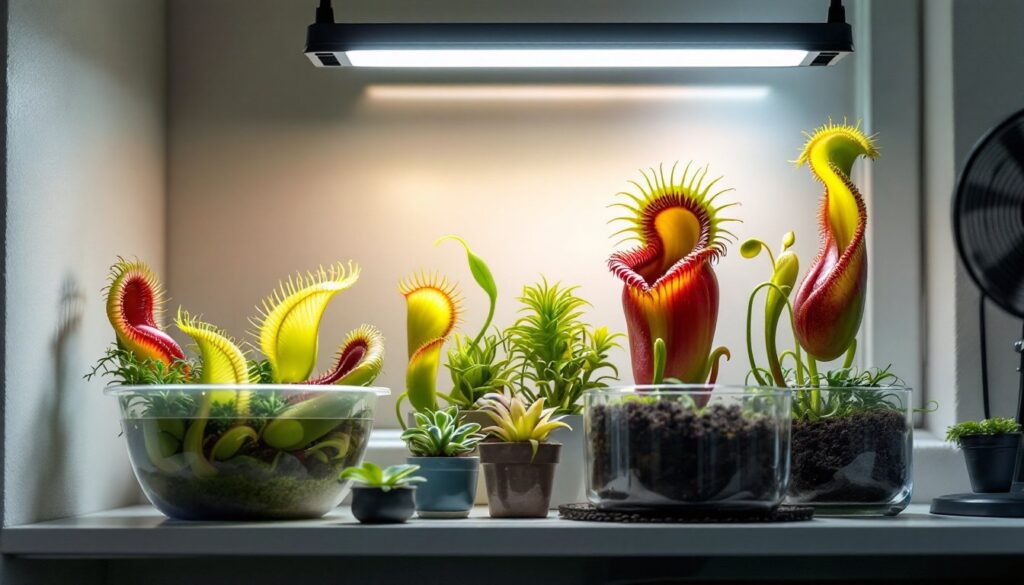
Venus flytraps (Dionaea muscipula) are the poster child of carnivorous plants. Each leaf has two lobes that snap shut in about 100 milliseconds when trigger hairs inside detect prey. They’re not hard to keep alive, but they do demand dormancy. A Venus flytrap needs 3–4 months of cooler temperatures (35–50°F) every winter to recharge. Without it, the plant weakens and eventually dies. If your home stays a steady 70°F year-round, a basement shelf or unheated garage works. Many indoor growers keep them in a cool windowsill or even a dormant closet during winter months.
Venus flytraps also want distilled water, tap water’s minerals accumulate and poison the soil over time. They prefer bright light, ideally 4+ hours of direct sun daily. In lower light, they’ll survive but weaken. A sunny south-facing window is ideal: a grow light works if you don’t have one. Don’t fertilize them. They eat insects for nitrogen, and commercial fertilizer actually harms them.
Sundews (Drosera species) are smaller, weirder, and often more forgiving than Venus flytraps. Their leaves are covered in sticky, glistening tentacle-like hairs that trap insects. Unlike flytraps, sundews need dormancy less rigidly, many temperate species can handle year-round indoor warmth. They do want high humidity (60–80%), which is the real challenge. A humidity tray, misting, or a closed terrarium-style setup keeps them happy. They’re pickier about water, too: distilled or rainwater only. Bright indirect light or filtered sun suits them better than intense, direct rays, which can bleach the leaves.
Sundews are smaller plants, usually 2–4 inches across. They’re perfect for shelves, terrariums, or windowsill corners. Unlike Venus flytraps, they don’t snap or move dramatically, but watching insects slowly dissolve in those sticky droplets is genuinely mesmerizing.
Pitcher Plants And Butterworts
Pitcher plants (Sarracenia and Nepenthes species) are tubular or urn-shaped traps that lure insects down a slippery rim. Sarracenias are North American natives: Nepenthes come from tropical Southeast Asia. Sarracenias need winter dormancy and cool nights (below 50°F in winter). Nepenthes, on the other hand, hate cold, they want temperatures between 55–75°F year-round and high humidity (70–80%). Choose based on your climate and setup. Sarracenias work in cool basements or cool rooms: Nepenthes thrive in warm bathrooms or enclosed grow spaces.
Pitcher plants are less fussy about water quality than Venus flytraps, they tolerate tap water better, though rainwater or distilled water is still preferable. They need bright light and consistently moist (not soggy) soil. Most pitcher plants grow tall and lanky, so they need vertical space or a tall shelf. Sarracenias can reach 12–24 inches: large Nepenthes exceed 3 feet. Give them room.
Butterworts (Pinguicula species) are the underdog of indoor carnivorous plants. Their leaves secrete a greasy, glue-like substance that traps tiny insects. They’re compact (usually 2–5 inches wide), easy to propagate, and surprisingly forgiving. Unlike most carnivorous plants, butterworts tolerate tap water and less-rigorous dormancy. Many are happy in bright, indirect light or even moderate indoor light. Humidity helps but isn’t mandatory. They’re the closest thing to a “beginner’s” carnivorous plant.
Butterworts come in temperate and tropical varieties. Temperate species need a 3–4 month cool winter rest: tropical varieties don’t. Both want bright light and consistent moisture but not waterlogged soil. They’re an excellent entry point if you’re nervous about more demanding species. Within a few months, most butterworts throw out small white or violet flowers, a bonus.
Essential Growing Conditions And Care Requirements
Light and temperature are non-negotiable. Carnivorous plants evolved in open wetlands and tropical canopies where they receive intense, unfiltered light. Indoors, aim for at least 3–4 hours of direct sun daily, or supplement with a full-spectrum grow light (6500K color temperature) positioned 6–12 inches above the plant. Insufficient light causes weak growth, pale leaves, and reduced trap production. Temperature varies by species, but most appreciate cool nights and moderate days. Avoid hot, dry air from heating vents or AC units.
Water is critical and often misunderstood. Carnivorous plants live in nutrient-poor, acidic soils in nature, usually bogs and fens where water is abundant but lacking minerals. Tap water’s dissolved minerals (calcium, magnesium, chlorine) accumulate in the soil and poison roots. Use distilled water, rainwater, or reverse-osmosis water exclusively. If you can’t access these, collect rainwater in a barrel or use a simple RO pitcher from a garden center. Keep soil consistently moist but not waterlogged. Standing water invites mold and rot.
Humidity and ventilation matter, especially for Nepenthes and sundews. Humidity levels of 50–80% prevent leaf tip browning and support trap formation. Create humidity with a pebble tray (fill a shallow tray with pebbles, add water until it touches, not submerges, the pebbles, and set the pot on top). Alternatively, grow plants in a closed terrarium, aquarium with a screen top, or bathroom with a window. Stagnant, humid air invites fungal issues, so ensure gentle air movement with a small fan on low speed.
Soil and potting require attention. Never use commercial potting mix: it’s too nutrient-rich and dense. Carnivorous plants want acidic, well-draining media like long-fibered sphagnum moss (not peat, which compacts), perlite, or a 1:1 mix of the two. Some growers add orchid bark for extra drainage. Repot in spring, right before active growth begins. Use soft, distilled water to settle the new medium. The pot should have drainage holes: plastic works fine, and clear pots let you monitor moisture and root health.
Feeding is optional. Unlike regular houseplants, carnivorous plants don’t need fertilizer, they extract nitrogen and minerals from trapped insects. If you keep your plants indoors where insects are scarce, they’ll still survive (they’re not starving), but growth may slow. You can occasionally feed Venus flytraps or pitcher plants by hand: drop a dead fruit fly, small cricket, or bit of freeze-dried insect into the trap. Don’t overfeed, one insect every two weeks is plenty. Avoid fertilizer: it will burn roots and damage the plant permanently.
Dormancy requirements vary. Venus flytraps and Sarracenia pitcher plants need 3–4 months of cool dormancy (35–50°F) to rest, reset flower production, and survive long-term. Without it, they decline. Move them to an unheated basement, cool garage, or outside if your winters are cold enough. Water sparingly during dormancy: don’t let soil dry out completely, but reduce frequency. Other species like Nepenthes, butterworts, and some sundews tolerate year-round indoor warmth but still benefit from cooler nights (drops of 10–15°F) to simulate natural conditions.
Research your specific species: dormancy isn’t one-size-fits-all. Many beginner failures trace back to ignoring dormancy or providing conditions too warm year-round.
Conclusion
Growing indoor carnivorous plants is achievable for any DIY grower willing to respect three core principles: provide bright light, use distilled water, and honor dormancy or humidity needs. Start with a forgiving species like a butterwort or sundew, nail the basics, and expand your collection once you’ve built confidence. These botanical predators reward precision and attention with years of fascination, pest control, and genuine conversation-starter appeal. The payoff, watching your plants hunt, makes the effort worth every drop of distilled water.