Hydroponic indoor plants are no longer just a novelty for tech-savvy gardeners, they’re becoming a practical solution for homeowners who want year-round fresh produce without soil, pests, or unpredictable growing seasons. Whether you’re working with a small apartment or a spare shelf in your basement, a hydroponic system lets you grow herbs, lettuce, tomatoes, and peppers in a controlled environment. This guide walks you through setting up your first hydroponic indoor gardening setup, selecting the right plants, and keeping everything running smoothly. If you’ve ever killed a houseplant or felt frustrated by outdoor gardening limitations, hydroponics offers a refreshingly straightforward alternative.
Table of Contents
ToggleKey Takeaways
- Hydroponic indoor plants grow 30–50% faster than soil gardening while using 90% less water, making them ideal for space-conscious homeowners seeking year-round fresh produce.
- A beginner hydroponic setup requires a water reservoir, LED grow lights, air pump, growing medium, pH testing kit, and nutrient concentrate, with complete kits typically costing $200–$400.
- Fast-growing herbs like basil, mint, and leafy greens like lettuce are the best choices for hydroponic indoor gardening, with harvests possible within 3–6 weeks of planting.
- Maintaining consistent pH levels between 5.5–6.5 is non-negotiable for nutrient absorption, requiring weekly monitoring and adjustment in your hydroponic system.
- Common issues like yellow leaves, root rot, and algae can be prevented through proper temperature control (62–75°F), adequate light positioning, and biweekly partial water changes.
Why Hydroponic Indoor Gardening Is Becoming a Home Staple
Hydroponic growing eliminates soil entirely, using nutrient-rich water solutions instead. Plants absorb exactly what they need, when they need it, which means faster growth rates, typically 30–50% faster than traditional soil gardening. You’re also dodging soil-borne pests, mold, and diseases that plague conventional indoor gardening. Year-round growing becomes possible because you control light, temperature, and humidity. Space efficiency is another huge win: vertical hydro plants indoor setups let you stack growing channels or tower systems in a closet, corner, or even a closet without the sprawling footprint of raised beds. Plus, hydroponic systems use about 90% less water than soil gardens because the water cycles continuously instead of draining away. For homeowners juggling busy schedules, this means less daily maintenance, no watering cans, no mud, no guesswork. The investment in equipment pays off within a season or two through reduced waste and faster harvests. Most growers find they’re eating homegrown lettuce, basil, and cherry tomatoes within 4–8 weeks of startup.
Essential Equipment and Materials You’ll Need to Get Started
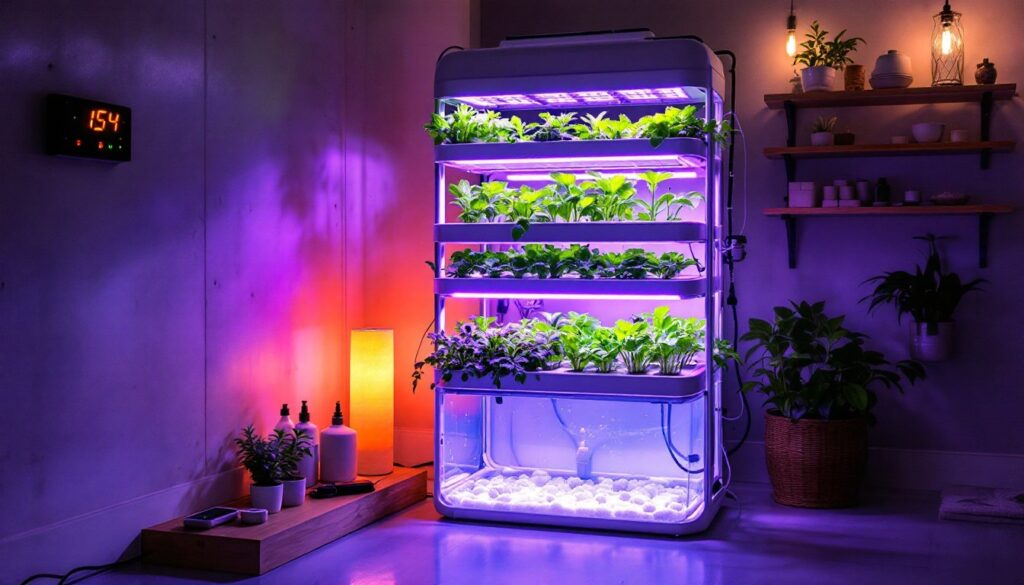
Before you build anything, gather your core materials. You’ll need a water reservoir (a food-grade plastic container, typically 10–20 gallons for beginners), an air pump and air stone to oxygenate the water, growing channels or net pots (small pots that hold plants above the water), an expanding growing medium like hydroton or rockwool instead of soil, nutrient concentrate formulated for hydroponics, and a pH testing kit (hydroponic water must stay between 5.5–6.5 pH). A simple timer for your air pump and grow lights is essential. LED grow lights rated for flowering and vegetative stages (look for full-spectrum) will replace natural sunlight indoors. Don’t skimp on lights, cheap units won’t deliver the light intensity plants need. You’ll also need a thermometer and ideally a digital pH pen for accurate monitoring. A small utility pump is optional but helpful if you want automated water circulation. For most first-timers, a complete beginner kit (reservoir, pump, lights, and growing channel) runs $200–$400. Individual component shopping can be cheaper if you’re handy, but kits often bundle things intelligently. Stock extra replacement air stones and growing medium: you’ll use them.
Best Plants for Hydroponic Indoor Growing
Not all plants thrive in hydroponic systems, some are natural fits, others struggle. Success hinges on choosing fast-growing, shallow-rooted, or high-value crops. Water-loving plants that despise being waterlogged in soil actually flourish in hydroponics because the roots stay oxygenated. Avoid slow-growers like trees or woody shrubs: they tie up your system space without payoff. Below are the proven winners for home hydroponic setups.
Herbs and Leafy Greens
Basil, mint, and parsley are hydroponic superstars. Basil especially grows explosively, you’ll be harvesting leaves within 3 weeks of planting. It prefers warm water (68–72°F) and rewards you with continuous leaf production if you pinch the tops regularly. Mint is nearly foolproof and grows so aggressively it can outcompete neighbors in a shared system: consider giving it its own channel. Parsley and cilantro are slower than basil but still manageable, maturing in 6–8 weeks. Lettuce, spinach, and arugula are the gateway crops for hydroponic house plants. They’re forgiving, grow fast (4–6 weeks to harvest), and produce heavily in a small footprint. Lettuce varieties like butter crunch and oak leaf are particularly prolific. These greens love cooler water (62–68°F) and tolerate closer spacing than you’d use in soil. Start with these if you’re new, failure is rare, and success breeds confidence.
Setting Up Your First Hydroponic System: A Step-by-Step Approach
Step 1: Assemble Your Reservoir and Circulation. Place your water reservoir on a sturdy, level surface, water is heavy, and an unstable foundation invites disaster. If using a deep water culture (DWC) system, position the air pump outside or above the reservoir and run the air hose to the air stone at the bottom. Secure all hoses with clamps: loose connections leak water and crash crops. Fill the reservoir with dechlorinated water (let tap water sit 24 hours to off-gas chlorine, or use filtered water). Add your hydroponic nutrient concentrate per the manufacturer’s dosing instructions, don’t guess or double-dose. Test the pH and adjust using pH-down or pH-up solutions until it sits between 5.5–6.5. This is non-negotiable: plants can’t absorb nutrients outside this window.
Step 2: Install Your Grow Lights. Suspend your LED grow lights 12–24 inches above the water surface (check your light’s specs for the right distance). A simple adjustable chain or rope system lets you raise lights as plants grow. Set the timer for 16–18 hours on, 6–8 hours off daily. Seedlings and early vegetative growth benefit from longer light periods: once plants flower, 12 hours on/off works. Don’t skip the timer, consistent photoperiods are critical.
Step 3: Prepare and Plant Your Growing Medium. Soak rockwool or hydroton in pH-buffered water (or just the calibrated reservoir water) for 30 minutes. Gently squeeze out excess water, waterlogged medium invites root rot. Place the medium into your net pots. You can start from seeds directly in the medium (slower) or transplant seedlings grown in potting soil (faster, with a gentler learning curve). If transplanting, rinse soil away from roots under lukewarm water and nestle the roots into the medium cushion.
Step 4: Monitor and Adjust. Check water level, pH, and temperature daily for the first two weeks, this habit catches problems early. Expect some transplant shock: plants may wilt slightly for a day or two, then perk up. Watch for algae blooms (indicating excess light on the water surface) and adjust light positions or add a light-blocking cover to the reservoir. Root development takes 7–10 days: new leaf growth follows after about two weeks. Resist the urge to fiddle constantly: trust the system and your planning.
Maintenance and Troubleshooting Common Issues
Weekly Tasks: Check and top off the reservoir as water is consumed by plants and evaporation. Test pH twice a week and adjust as needed. Monitor temperature, if it drifts above 72°F consistently, increase air pump duration or add a small clip fan to improve circulation. Remove any dead leaves to prevent fungal buildup. Pinch herb tops to encourage bushier growth and delay flowering.
Biweekly Tasks: Clean the air stone if it becomes clogged (soak in a 3% hydrogen peroxide solution for 15 minutes). Inspect roots through the reservoir, healthy roots are white and firm, not slimy or brown. Do a partial water change: remove 25–30% of the water, top off with fresh dechlorinated water plus appropriate nutrient dose. This prevents nutrient imbalances and salt buildup.
Common Problems and Fixes:
Yellow or pale leaves usually signal nutrient deficiency. Check your nutrient concentration (EC or PPM meter helps here) and verify pH is in range. Sometimes it’s just nitrogen: a small additional nutrient boost may help, but wait 5 days to see results before adding more.
White fuzzy growth on the medium is mold. Increase airflow, remove affected medium, and lower humidity by running lights fewer hours or improving ventilation.
Wilting even though wet roots points to root rot or temperature stress. Check if water temperature exceeds 75°F: cool it with ice packs or a small aquarium chiller if necessary. Inspect roots for slime: if present, perform a complete water change immediately.
Stunted growth often comes from inadequate light. Most LED units need to be closer or stronger than beginners assume: move lights 4–6 inches closer and observe for improvement. It can also mean nutrient ratios are off: reference your nutrient brand’s feeding chart and resources on hydroponic gardening basics for detailed troubleshooting.
Algae in the reservoir thrives in light. Block light access with opaque covers or paint your reservoir matte black. Algae itself isn’t harmful to plants but competes for nutrients and oxygen, so eliminate it. Complete guides on hydroponic systems offer additional deep dives into troubleshooting.
Scaling: As your confidence grows, expand with more advanced house plants or try easy house plants alongside your hydroponic setup to compare results. Many growers run both systems, hydroponics for greens and herbs, traditional potting for popular house plants that prefer soil.