Indoor vining plants are one of the easiest ways to add life, color, and visual interest to any room without committing to a full garden overhaul. Whether you’re draping a shelf, filling a corner, or creating a living wall, vining plants deliver major impact with minimal fuss. Unlike fussy houseplants that demand perfect lighting or constant watering schedules, many indoor vines are tough, forgiving, and genuinely rewarding to grow. This guide walks you through selecting the right vines for your space, keeping them thriving, and displaying them in ways that actually look intentional, not just overgrown.
Table of Contents
ToggleKey Takeaways
- Indoor vining plants are low-maintenance alternatives that solve real decorating challenges by softening architectural lines, filling vertical spaces, and improving air quality without requiring specialized care.
- Pothos (Devil’s Ivy) is the best starting point for beginners because it tolerates low light, irregular watering, and temperature fluctuations that would harm most houseplants, growing up to a foot per month.
- The most common mistake with indoor vines is overwatering; let soil dry between waterings by checking with your finger, and reduce watering frequency during fall and winter.
- Moderate indirect light works best for most vining plants, though they’ll tolerate lower conditions at the cost of slower growth; direct harsh afternoon sun can scorch leaves.
- Moss poles and trellises create dramatic living columns by directing vine growth upward, while hanging planters and shelf cascades offer simpler ways to display vines for maximum visual impact.
- After mastering pothos, progress to intermediate indoor vining plants like hoya (which produces fragrant flowers) or string of pearls (a drought-tolerant succulent vine) to expand your skills.
Why Indoor Vining Plants Deserve a Place in Your Home
Indoor vining plants solve real problems that most homeowners face. First, they soften hard architectural lines and fill awkward vertical spaces that would otherwise sit empty. A blank wall above a bookshelf or beside a window becomes a living backdrop when you train a vine to climb a simple support. Second, they’re genuinely low-maintenance compared to typical houseplants. Vines don’t demand the precision light and water schedules that fussy specimens like orchids or gardenias require. They adapt to moderate indirect light and tolerate occasional missed waterings, making them ideal for busy households or first-time plant parents.
Third, they improve air quality. Like all plants, vines absorb carbon dioxide and release oxygen, but their larger leaf surface area means they work harder than compact plants. They also reduce indoor air pollutants, creating a fresher, healthier environment without any effort on your part. Finally, vines are cheaper to establish than most interior design solutions. A single $8–15 cutting or small starter plant can cascade across an entire bookshelf or frame a doorway for under $30 in materials.
Best Indoor Vining Plants for Beginners and Experienced Growers
Pothos and Philodendrons
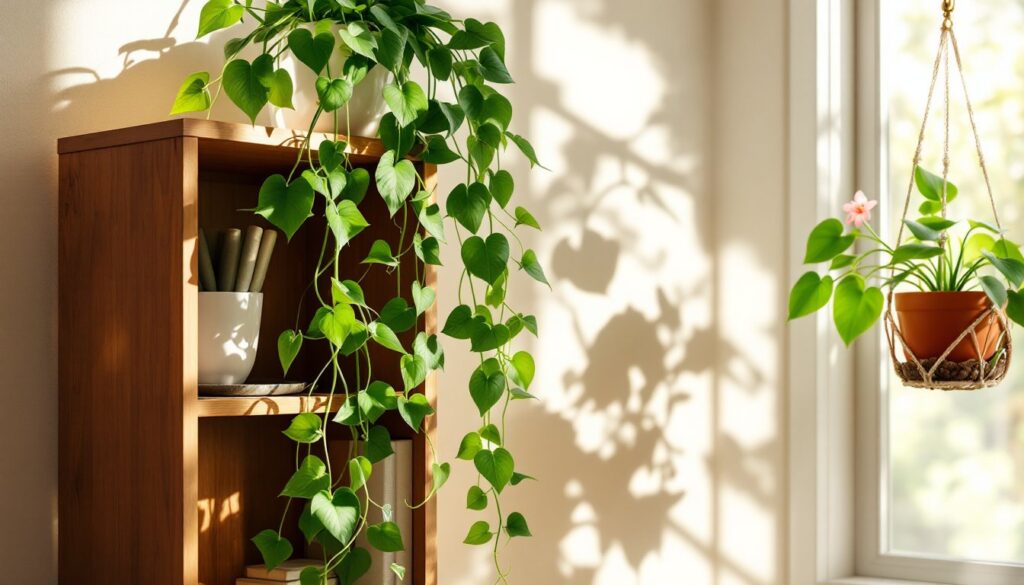
Pothos (also called Devil’s Ivy) is the undisputed king of beginner vines and for good reason. It tolerates low light, irregular watering, and temperature swings that would kill pickier plants. Pothos grows quickly, sometimes a foot per month under decent conditions, and looks great trailing from shelves, wrapped around moss poles, or cascading from hanging planters. Heart-shaped leaves come in solid green or variegated cream-and-green varieties. Philodendrons are equally forgiving cousins with slightly different leaf shapes: both belong to the same family and share similar care requirements.
The most common mistake is overwatering. Let the soil dry out between waterings, stick your finger an inch into the soil, and if it feels moist, wait another few days. Both plants prefer moderate indirect light but adjust to lower conditions (they’ll just grow slower). Pinch back growing tips regularly to encourage bushier, fuller growth rather than a single long strand.
Hoya and String of Pearls
Hoya (wax plant) is a step up in difficulty but still very manageable. It produces waxy, star-shaped flower clusters that smell sweet and appear when the plant is happy and mature. Hoyas are slower-growing than pothos but equally durable, and their compact leaves make them elegant for smaller shelves or corner displays. They prefer brighter indirect light and benefit from slightly drier conditions than pothos.
String of Pearls (Senecio rowleyanus) is a succulent vine with bead-like leaves that dangle beautifully from hanging planters. It loves bright light and well-draining soil, treat it more like a succulent than a tropical vine. Both plants are less forgiving about overwatering than pothos, so err on the drier side. If you’re building confidence with a vine, start with pothos: once you’ve got that dialed in, hoya and string of pearls are natural next steps.
Essential Care Tips for Thriving Indoor Vines
Watering is the single biggest variable in vine health. Most indoor vines prefer to dry out slightly between waterings rather than stay constantly moist. Check soil moisture with your finger before watering, don’t rely on a schedule. During growing season (spring and summer), you’ll water more frequently: in fall and winter, dial it back. Use room-temperature water and avoid letting pots sit in standing water, which invites root rot.
Light matters, but vines are forgiving here too. Moderate indirect light (a few feet from an east or north-facing window, or filtered afternoon sun from a south-facing window) keeps most vines thriving. They’ll tolerate lower light for months but grow slowly. If growth stalls or leaves pale out, move the plant closer to a light source. Direct harsh afternoon sun can scorch leaves, especially on tender varieties.
Humidity helps but isn’t essential. Many indoor vines evolved in humid tropical environments, so they appreciate misting or occasional showers, but they adapt to average home humidity. If leaves develop crispy brown edges, humidity is likely too low, either mist weekly or set the pot on a pebble tray filled with water (don’t let the pot sit directly in water).
Fertilize sparingly. During growing season (April through September), feed every 4–6 weeks with a balanced, diluted houseplant fertilizer. In winter, hold off entirely. Over-fertilizing causes salt buildup in soil, which damages roots. When in doubt, feed less frequently rather than more.
Pruning keeps vines shaped and encourages branching. Pinch off the top ¼ inch of a stem with your fingers, or cut just above a node (the bumpy point where a leaf attaches). New growth emerges from the node, creating a fuller plant. Vines don’t need heavy pruning, just remove dead leaves and trim any straggly stems that exceed your display space. Many growers use common house plants as reference guides for seasonal care routines.
Creative Display Ideas and Support Structures
The way you display a vine transforms how it grows and how the room feels. Hanging planters are the simplest option, just hang a pot, let the vine cascade, and enjoy. Macramé hangers add texture, but any sturdy hook works. Shelf cascades are equally easy: place a pot on a tall shelf and let the vine spill over the edge. It softens the shelf edge and frames whatever’s displayed below.
Moss poles and trellises redirect growth upward, creating living columns of greenery. A moss pole is literally a sturdy pole wrapped in sphagnum moss or coco fiber. As the vine grows, gently secure new stems to the pole with soft ties (avoid wire, which cuts into stems). The aerial roots naturally grip the pole, mimicking how vines climb trees in nature. Wooden trellises work similarly and lean casually against a wall or corner. Pothos and philodendrons take to moss poles beautifully: hoya and string of pearls look better trailing from baskets or shelves.
Training vines around doorways or windows requires patience but pays off. Use small adhesive hooks or clips to guide growth along a frame. Trim regularly so the vine doesn’t overtake the space. For larger installations, plant-based wall planters or shadow boxes let you arrange multiple small vines into a dramatic living wall feature. These require more frequent watering since smaller containers dry faster, but the visual payoff is striking.
Consider your pot material too. Terracotta breathes and dries faster, suiting succulents like string of pearls. Plastic or ceramic pots retain moisture longer, better for pothos and philodendrons. Drainage holes are non-negotiable, excess water has nowhere to go without them. Resources like Better Homes & Gardens and Sunset showcase countless display ideas adapted for different room styles and light conditions.
Conclusion
Indoor vining plants transform empty corners and bare shelves with minimal effort and cost. They’re forgiving enough for beginners, interesting enough for experienced plant parents, and flexible enough to fit any décor style. Start with a pothos if you’re new to houseplants: branch into hoya or string of pearls once you feel confident. Your indoor house plants investment compounds quickly, one healthy vine becomes multiple propagated cuttings, and suddenly your home is greener, fresher, and genuinely more inviting. The only barrier to success is starting.